 Bordeaux Wine Day Tour
Pomerol Wine: The Merlot Heart of the Right Bank
Pomerol wine comes from the smallest wine-producing area in Bordeaux, a patch of the Right Bank in the Libourne urban area where Merlot rules. This guide explains what makes Pomerol wine different, from the iron-rich crasse de fer in the soil to the blue clay under Petrus, why the appellation has never built a classification, and how the neighbouring names Saint-Émilion and Lalande-de-Pomerol fit in. It also covers the practical side: how to arrange a visit, how far Pomerol sits from Libourne and Saint-Émilion, and the one day tour from Bordeaux that gets you into Pomerol with a WSET-certified guide. For how the Right Bank compares with the Bordeaux wine regions map, start there. The bookable tours are compared on Bordeaux wine day tour.
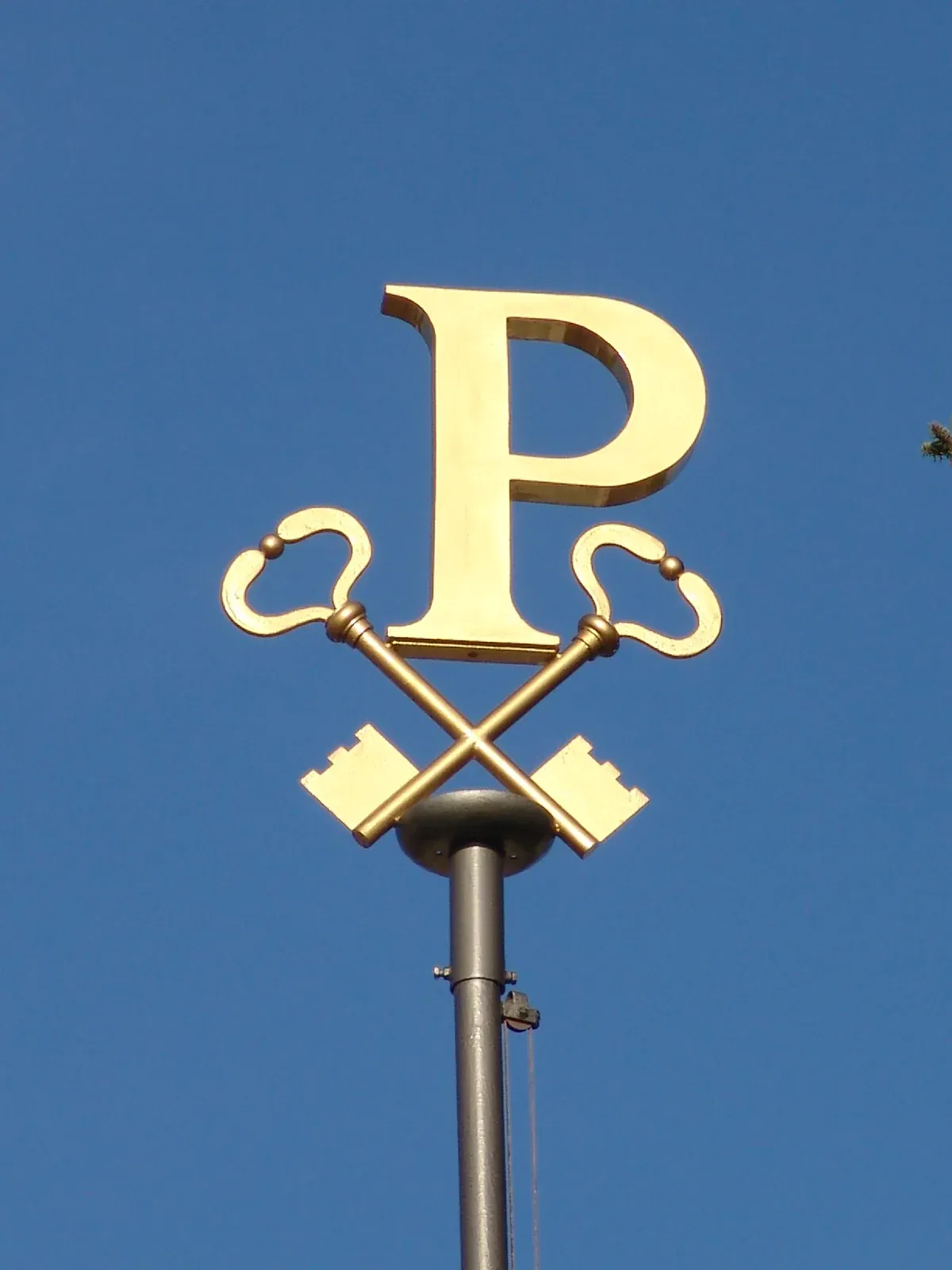
The weathervane of Pétrus in Pomerol. Photo: Giogo, CC BY-SA 4.0, via Wikimedia Commons
Quick answer Pomerol in brief
Pomerol is Bordeaux's smallest wine-producing area, about 800 ha of vines near Libourne, planted 80 to 85% with Merlot. The wines are Right Bank reds, sold under the Pomerol AOC recognised in 1936. Petrus and Le Pin are the names people know, and both sell at prices comparable to first growths elsewhere in Bordeaux without any classification.
Key takeaways
- Pomerol has never had an official classification. A 1943 ranking was abolished in 1944 and none has been attempted since. See the estates and the classification question.
- The soils do the talking: blue clay under Petrus and iron-rich crasse de fer across the plateau. Details in the appellation section.
- Visits take planning, so contact estates directly. Details in Visiting Pomerol.
- The one listing that names Pomerol in its title is the Saint-Émilion and Pomerol Wine Tour with a WSET guide at $182.70. Bookable tours overall are compared on the Bordeaux wine tours homepage.
The Smallest Great Appellation
Pomerol sits on the Right Bank of the Dordogne, in the Libourne urban area, and it is the smallest wine-producing area in Bordeaux. Its size is tiny by regional standards, so every figure here is worth knowing.
Pomerol by the Numbers
Sources disagree on the exact planted area and even on the grower count, so both sides are given in the table. Wikipedia and Wine Folly put the appellation at about 800 ha, the French Wikipedia counts 780 ha planted in 2023, and Wine with Seth gives 813 ha. The commune itself had 608 inhabitants in 2023 and covers 6.24 km2. AOC rules cap the yield at 60 hl/ha and set a minimum natural alcohol of 11%. The appellation was recognised by decree of 8 December 1936, after a court fixed the boundaries in 1928.
For scale, compare this with Saint-Émilion, which has roughly 5,000 to 5,400 ha. Bordeaux as a whole counts about 110,000 ha of vines according to the CIVB.
| Fact | Figure |
|---|---|
| Appellation area | About 800 ha (780 ha planted in 2023 per French Wikipedia, 813 ha per Wine with Seth) |
| Rank in Bordeaux | Smallest wine-producing area |
| Winegrowers | 138 (French Wikipedia), 135 wineries per Wine Folly, up to 150 in a search summary |
| Merlot share of plantings | 80% (Wine with Seth) to about 85% (Wine Folly) |
| Cabernet Franc share | 15% |
| Maximum yield | 60 hl/ha |
| Minimum natural alcohol | 11% |
| Commune | 608 inhabitants in 2023, 6.24 km2 |
Clay, Iron and the Plateau
Pomerol wine is defined by soil. The appellation mixes clay-gravel and sandy gravel over a subsoil rich in iron oxide, known locally as crasse de fer. Wine Folly describes three soil types across the plateau: clay, which gives powerful, tannic wines, gravel, which gives finesse and perfume, and the crasse de fer itself, which is believed to add minerality. French Wikipedia adds a clay boutonniere, a button of clay, that sits mostly under Petrus at the highest point of the appellation.
That blue clay pocket covers about 20 ha and peaks at 39 m, and it surrounds Petrus. Cold clay is exactly where Merlot thrives, and it ripens up to two weeks earlier than Cabernet Sauvignon, a useful trait on a plateau where Cabernet Sauvignon plays almost no role. Current plantings are about 80 to 85% Merlot and 15% Cabernet Franc, with Cabernet Sauvignon around 5% at most. A typical Right Bank blend across Saint-Émilion and Pomerol runs about 70% Merlot, 15% Cabernet Franc and 15% Cabernet Sauvignon, and Merlot makes up roughly 80% of a typical Pomerol blend, against about 60% for Saint-Émilion. That contrast is the single clearest way to tell Pomerol wine from its neighbours.
Sources: Wikipedia Pomerol, Wine with Seth, Wine Folly
Petrus, Le Pin and No Classification
A handful of names carry the whole appellation's reputation. What makes them remarkable is that none of them holds an official rank, because Pomerol never built one.
Petrus and Le Pin
Château Petrus covers 11.4 ha and has been 100% Merlot since the end of 2010, producing about 30,000 bottles a year. It grew from 7 ha after a 5 ha purchase from Château Gazin in 1969. Jean-François Moueix owns it, and Alejandro Santo Domingo took a 20% stake in 2018. The estate sits on the blue clay pocket, the appellation's highest ground.
Château Le Pin is even smaller: 2.7 ha of 100% Merlot on sandy gravel over limestone, with typically 600 to 700 cases a year. Jacques Thienpont bought it in 1979. Wine Folly lists the five best-known Pomerol estates as Petrus, Le Pin, Lafleur, L'Église Clinet and Vieux Château Certan. Petrus and Le Pin sell at prices comparable to first growths elsewhere in Bordeaux.
Why There Is No Classification
Pomerol has no official classification, and the history explains the oddity. French Wikipedia records that a 1943 classification was abolished in 1944, and Wine with Seth says Pomerol has never attempted one since. With 138 growers on about 800 ha, reputation travels by estate name rather than by rank, and Petrus and Le Pin sell at prices comparable to first growths elsewhere in Bordeaux without belonging to any list.
Contrast this with Saint-Émilion next door, where the classification began in 1955 (1954 on the tourist office timeline), is updated about every ten years and has three tiers, or with the Médoc, where the 1855 list ranks the estates, as in the Pauillac and Château Margaux stories. If someone tells you a bottle is a classified Pomerol, there is no such thing.
Sources: Wikipedia Pomerol, Château Pétrus, Château Le Pin
Bordeaux Wine Basics: Pomerol Wine Region
The Pomerol appellation in a short explainer. Third-party video by Trophy Wine Hunter. This site did not shoot it and has no relationship with the creator.
Pomerol Against Saint-Émilion and Lalande-de-Pomerol
Pomerol shares the Right Bank with two names that confuse buyers. Saint-Émilion is bigger and classified. Lalande-de-Pomerol is legally a different appellation.
Three Appellations Compared
The table puts the three side by side using only figures from the sources listed below. Pomerol is at roughly 800 ha, against about 5,000 to 5,400 ha for Saint-Émilion. Lalande-de-Pomerol AOC covers two communes, Lalande-de-Pomerol itself for about 60% and Néac for about 40%, and the tourist office lists it among the 12 appellations of the Grand Saint-Émilionnais.
Saint-Émilion runs its own classification with three tiers, and the 2022 edition counted 2 Premier Grand Cru Classé A, 12 Premier Grand Cru Classé B and 71 Grand Cru Classé.
| Feature | Pomerol | Saint-Émilion | Lalande-de-Pomerol |
|---|---|---|---|
| Vineyard area | About 800 ha (780 to 813 ha across sources) | About 5,400 ha, or 5,000 ha of vines per the tourist office | Not stated |
| Classification | None, a 1943 attempt abolished in 1944 | Since 1955, three tiers, updated about every ten years | Not stated |
| Commune population | 608 (2023) | 1,608 (2023), or about 1,876 per the tourist office | 618 (2023) |
| Commune size | 6.24 km2 | Not stated | 8.25 km2 |
| Distance from Libourne | About 3.4 km from Libourne station | 8 km from Libourne | Not stated |
| Growers | 138 (French Wikipedia), 135 to 150 across sources | Not stated | Not stated |
Reading the Labels
The practical point is that a bottle marked Pomerol comes from the 800 ha around the village, and nothing else. Lalande-de-Pomerol is a separate AOC and says so on the label. Saint-Émilion has its own grape balance, about 60% Merlot in a typical blend against Pomerol's 80 to 85%, and its own medieval village.
If you want the full Saint-Émilion picture, the Saint-Émilion guide and the page on the monolithic church of Saint-Émilion cover it. Pomerol itself is a commune of 608 inhabitants (2023).
Sources: Wikipedia Pomerol, Saint-Émilion wine, Gilbert and Gaillard
Visiting Pomerol
Pomerol is a small commune and visits take planning. No official price for a château visit or tasting is given here.
Getting There and Getting In
Pomerol sits in the Libourne urban area, about 3.4 km from Libourne station and about 12 km from Saint-Émilion, and route data plus a visitor guide describe a 10-minute drive from both Libourne and Saint-Émilion. The train side is covered in the guide to getting from Bordeaux to Saint-Émilion, since Libourne sits on the same line out of Bordeaux.
Getting in is the harder part. This guide does not quote any official château visit or tasting price. Contact estates directly before you go.
- Pomerol is about 3.4 km from Libourne station and about 12 km from Saint-Émilion.
- Contact estates directly before you go, since visits take planning.
- The church of Saint-Jean de Pomerol was built by the Hospitallers, partly demolished in the 19th century, rebuilt in 1899 by architect Hosteing, with the choir renovated in 1971.
The Hospitallers' Village
The Knights Hospitaller shaped Pomerol's early history. The Hospitallers of Saint John of Jerusalem settled here in the early 12th century, when Guillaume de Ségur and his brothers donated land to found the commanderie. Viticulture in Pomerol began with them in that same century.
The Hospitallers tended pilgrims on the road to Santiago de Compostela, and their assets in France were seized in 1792. The church of Saint-Jean de Pomerol was built by the Hospitallers, partly demolished in the 19th century, rebuilt in 1899 and had its choir renovated in 1971.
The Day Tour That Reaches Pomerol
Only one listing in the comparison names Pomerol in its title. The Saint-Émilion and Pomerol Wine Tour with a WSET guide costs $182.70, runs 6 hours, takes up to 8 guests aged 13 to 105 and includes wine tastings at each winery plus a picnic-style lunch with local products. It is run by Entre Vides Bordeaux and offers English and Spanish departures. Meet 10 minutes before departure in front of the bakery Qu4tre-Qu4rts. Free cancellation applies up to 24 hours before. It visits Grand Cru Classé estates in Saint-Émilion and Pomerol with a WSET-certified wine expert.
If Pomerol is not essential and you only want the Right Bank, Saint-Émilion options include the half day with village and Grand Cru tour at $95 for 4 to 4.5 hours, and the e-bike day with lunch at $211.25. The full comparison of bookable tours lives on the Bordeaux wine day tour homepage.
Sources: Rome2Rio, The Wine Doctor, Winedering
Pomerol Questions
What kind of wine is Pomerol?
Pomerol wine is red. The AOC permits five varieties but current plantings are about 80 to 85% Merlot and 15% Cabernet Franc, giving rich Right Bank reds. Read the full picture in The Smallest Great Appellation.
Where is Petrus wine from?
Petrus comes from Pomerol, on the appellation's highest point, where a blue clay pocket of about 20 ha surrounds the estate. The vineyard is 11.4 ha and 100% Merlot. See Petrus and Le Pin.
Is Petrus wine expensive?
The sources state that Petrus and Le Pin sell at prices comparable to first growths elsewhere in Bordeaux. No bottle price is published in the facts recorded here. The context is in Petrus and Le Pin.
Why does Pomerol have no classification?
A 1943 classification was abolished in 1944 and Pomerol has never attempted another one. Reputation rests on estate names such as Petrus, Le Pin, Lafleur, L'Église Clinet and Vieux Château Certan. The whole story is in Why There Is No Classification.
How do I visit Pomerol from Bordeaux?
Independent visiting takes planning, so contact the estate first. The one bookable group option is the Saint-Émilion and Pomerol Wine Tour with a WSET guide at $182.70. Logistics are in Visiting Pomerol.